The rather foolish decision to build a computer

welw✉️ 20261003
I have always had a slightly unhealthy curiosity about electronics. As a child I would disassemble things to find out what was inside. Occasionally, this curiosity survived long enough for me to try putting something back together. Eventually, I wanted to build and own a hardware platform. That was, in retrospect, a rather foolish decision.
Being rather a curious child, I would open electronics to see and find out what is inside. My curiosity did not stop there. I tried to build my own computer in my spare time, and there it is.
I built a simple computer. This computer can do the following:
- Run compiled C code using Atmel microcontroller.
- Read and write data to memory card. FAT32 driver is included, so you can read and write using your computer.
- Communicate over serial port over USB.
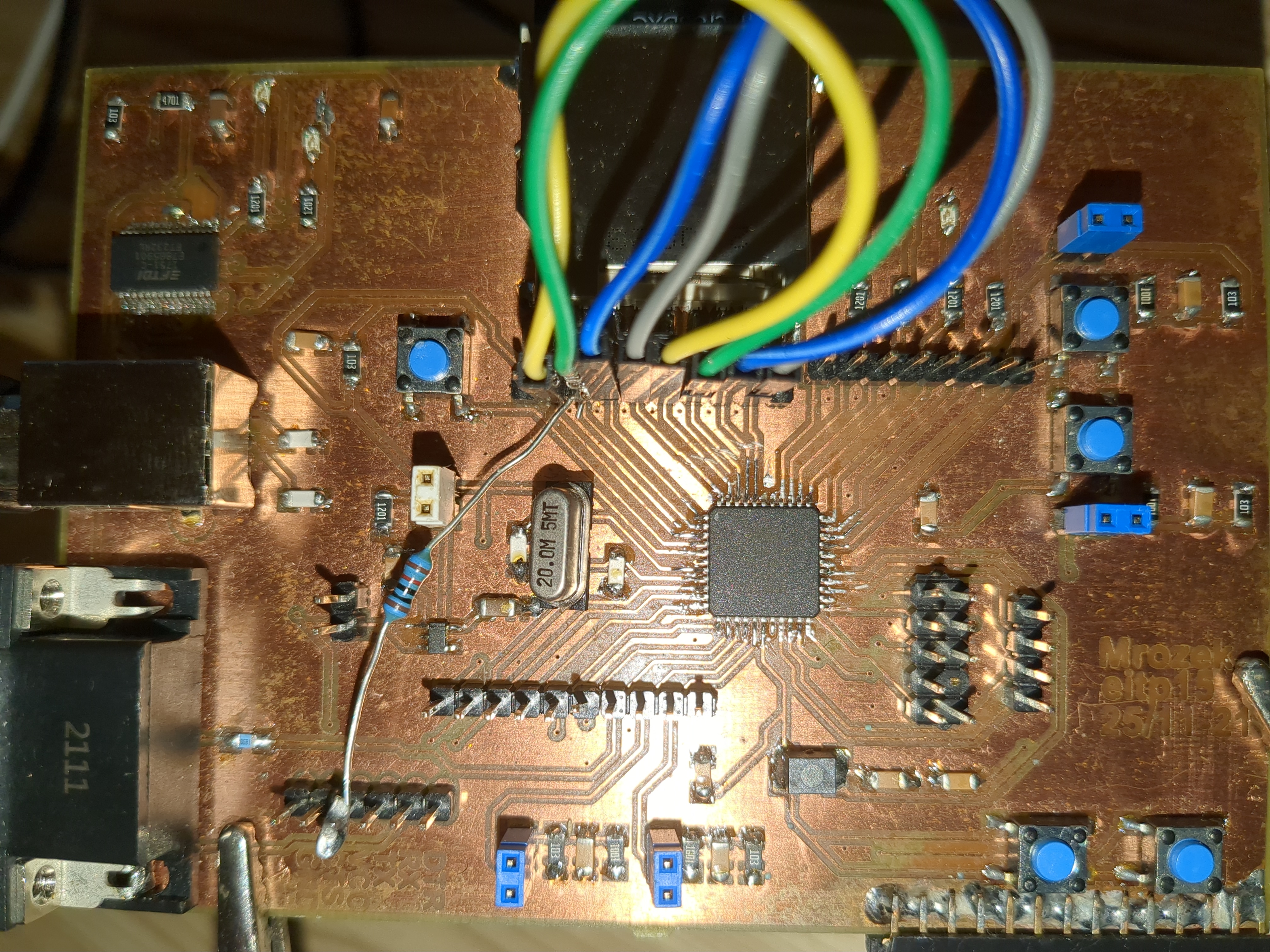
The rather foolish decision
Thait is deciding that building a computer was a sensible way to learn…
I always thought that a best way to understand something is to build it. This is a brilliant idea until, of course, somebody decides to build a computer. Not merely in the rather vague sense of knowing that there is a processor somewhere doing clever things, but properly: memory, buses, peripherals, storage, etc.
I should probably make it clear at once that this machine won’t replace your laptop. It’s a small computer built around Atmel microcontroller with enough surrounding hardware to make it rather more interesting than a microcontroller development board.
Peripherials, improvements, whatever other trouble you intend to cause
It is a well known fact that a well-equipped processing unit is of quite no use without accompanying peripherials. That is why we need to embed some.
No computer comes from a storage unit. In this case, a memory card will do.
A memory card in its simplest configuration talks to microcontroller over an SPI bus. A SPI bus